
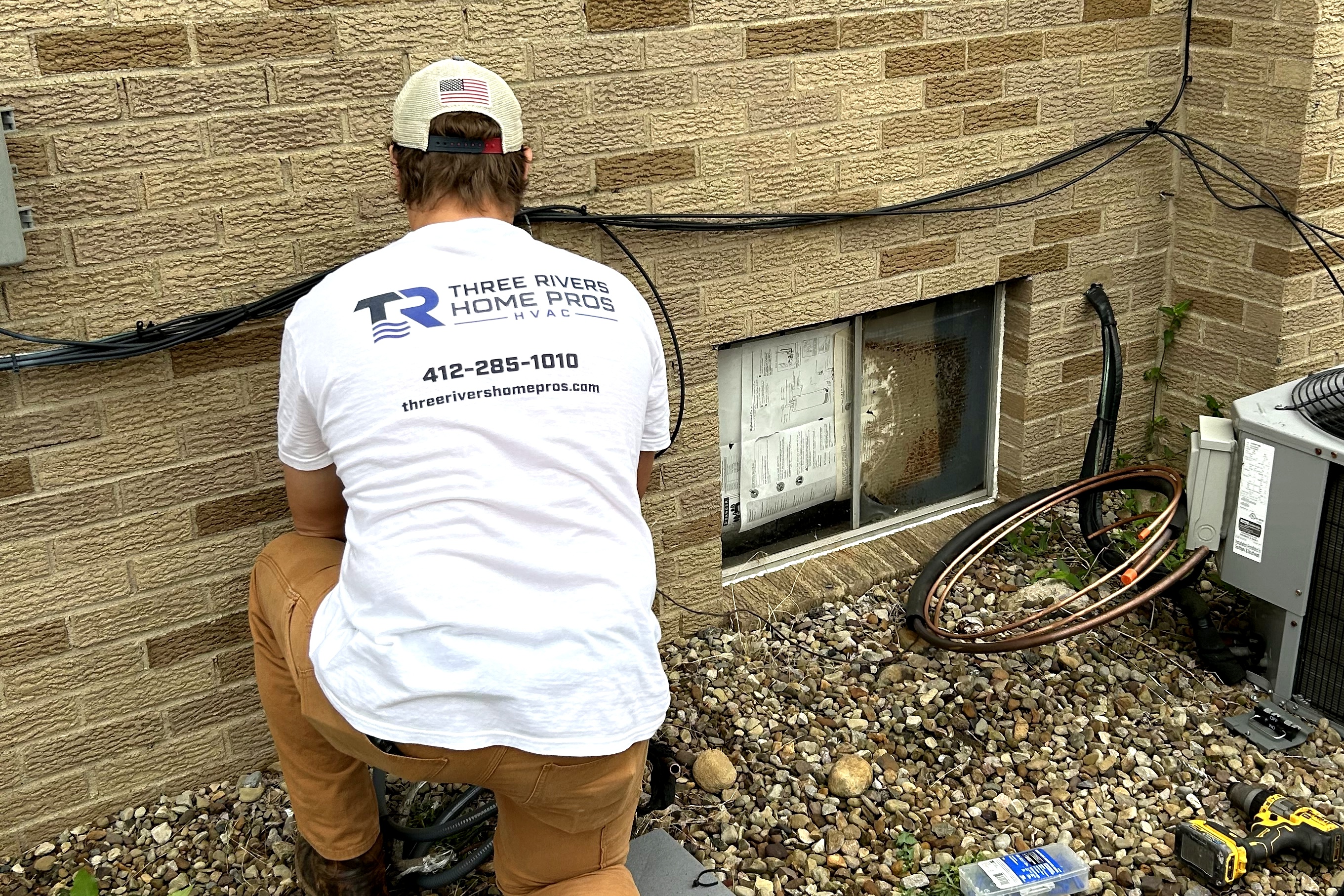
If you are shopping for a new furnace or air conditioner, you have probably already noticed that everyone has an opinion about which brand is “the best.” Ask five people, or five contractors, and you might get five different answers, usually delivered with total confidence. Here is the honest version: for most homeowners, the brand on the front of the unit matters a lot less than people think. The bigger factors are how well the system gets installed and sized for your home, and how it gets maintained afterward. Where the brand actually does matter, in a very practical way, is what happens later, when something breaks and you need a part. That is where a brand like Goodman has a real, unglamorous advantage. This guide walks through why brand parity is mostly true, what actually drives a system’s lifespan and comfort, and why parts and serviceability deserve more weight in your decision than the badge.
The brands mostly perform the same. Here is why.
Every HVAC brand’s marketing wants you to believe their equipment is meaningfully better than the competition’s. In practice, the major residential brands, names like Trane, Carrier, Lennox, Rheem, American Standard, and Goodman, cluster pretty tightly on long-term reliability once you are comparing a properly installed, properly maintained system to another properly installed, properly maintained system. None of them is a bad choice. None of them is a magic bullet either.
A few reasons that is true:
- The core technology is not that different. A gas furnace from any major brand burns fuel, heats a heat exchanger, and pushes air with a blower. An air conditioner from any major brand compresses refrigerant and moves heat. The physics are the same across brands, and the engineering has matured to the point where the gap between “good” brands has narrowed a lot over the years.
- Shared manufacturing is more common than most homeowners realize. The HVAC industry is built around a relatively small number of manufacturers, and it is common for a single manufacturer to produce equipment sold under more than one brand name, sometimes with different features or price points, sometimes nearly identical under the hood. The nameplate you are shopping by does not always tell you as much about the actual equipment as it seems to.
- Independent reliability data backs this up. When reliability and repair-frequency data gets studied across brands, the major names tend to land close together rather than sorting cleanly into “great” and “bad” tiers. The differences that show up are usually smaller than the differences installation quality makes.
None of this means every unit is identical or that brand is meaningless. It means that picking a major brand and assuming your comfort and bills are locked in is the wrong way to think about it. The decision that actually moves the needle happens next.
What actually drives how your system performs
If brand is not the deciding factor, what is? In our experience, it comes down to a short list, and none of it is flashy.
- Correct sizing for your home. An HVAC system that is too big or too small for your house will run poorly no matter whose name is on it. Oversized equipment short-cycles, wears out faster, and leaves you with uneven comfort. Undersized equipment runs constantly and still cannot keep up on the coldest or hottest days. Sizing is a calculation based on your home’s square footage, insulation, windows, and layout, not a guess.
- Installation quality. This is the biggest lever there is. Proper refrigerant charge, sealed and sized ductwork, correct airflow, and a clean, code-correct setup make the difference between a system that runs efficiently for two decades and one that struggles from day one, regardless of brand. A great unit with a mediocre install will disappoint you. A solid, well-priced unit with a great install will often outperform expectations.
- Regular maintenance. A furnace or AC that gets a yearly tune-up runs cleaner, safer, and longer than one that never gets looked at. This matters across every brand equally.
- How hard the system has to work. A home’s insulation, air leaks, and duct condition all affect how much strain the equipment is under, which affects both comfort and how long it lasts.
Put simply, two identical furnaces from two different homeowners’ houses can have very different lifespans, and the brand is rarely the reason. The install, the sizing, and the upkeep usually explain the gap.
So where does brand actually matter? Parts and serviceability.
Here is the part of this conversation that almost nobody talks about, and it is the one that actually affects you years down the road: when your system eventually needs a part, how easy is that part to get, and how many technicians actually know how to work on it?
This is where the brands genuinely separate from each other, and it has nothing to do with how well the unit heats or cools your home on day one.
- Distribution network. Some premium brands sell through a smaller, more exclusive dealer network. That can mean fewer local suppliers stock their parts, and a part that is not on the shelf has to be special-ordered, which can mean days of waiting, sometimes longer, especially in cold snaps or heat waves when everyone else is calling too.
- Goodman is different here. Goodman equipment is sold through a wide, open wholesale distribution network rather than a small closed circle of authorized dealers. In practical terms, that means common Goodman parts are typically sitting on a shelf at a local supply house, often available same-day or next-day rather than special-order.
- Cost of the part itself. Because Goodman parts move through that same open, competitive distribution system, they also tend to cost less than equivalent parts for some of the premium, closed-network brands. That is a real difference in what a repair actually costs you over the life of the system, separate from what the equipment cost to install in the first place.
- Who can actually work on it. Because Goodman is not locked behind an exclusive-dealer training and parts system, most HVAC technicians, not just a narrow certified circle, already know how to service one. That matters if your regular contractor is booked, retires, or you just want a second opinion from someone new. You are not stuck with a small pool of brand-certified installers being the only ones who can touch your equipment.
- The build-quality gap has closed too. Goodman has been owned by Daikin, one of the largest HVAC manufacturers in the world, since 2013, and manufacturing quality has closed a lot of the ground it used to trail behind premium brands. It is not marketed as a luxury brand and it does not pretend to be one, but the “budget equals flimsy” reputation it had decades ago is outdated.
None of this is a knock on Trane, Carrier, Lennox, or any other brand. Those are legitimate, well-built systems, and plenty of homes run one for twenty trouble-free years. The honest point is narrower: if you are weighing brand as part of your decision, weigh it on this axis, how easy the system is to keep running for the next fifteen or twenty years, rather than on marketing claims about which one is “the best.”
How to actually think about this when you are buying
Bring this list to the decision instead of a brand preference:
- Ask who is doing the install and what their process looks like. A contractor who talks about sizing, ductwork, and airflow is thinking about your actual outcome. A contractor who leads with the brand name and nothing else is selling you a logo.
- Ask about parts availability for whatever you are considering. It is a fair, specific question: if this breaks in five years, how fast can you get the part, and what does it typically cost? A contractor who can answer that plainly is being straight with you.
- Do not assume the most expensive brand is automatically the safest bet. A properly installed, mid-range system from a widely serviced brand can be a smarter long-term choice than a premium-badge system that is harder and pricier to keep running.
- Do not assume the cheapest option is a shortcut either. The install quality matters more than the sticker price of the equipment. A bargain unit installed poorly is not actually a bargain.
- Ask about maintenance, not just the sale. A system that gets a yearly tune-up will outlast and outperform one that does not, on any brand.
Where Three Rivers stands on this
We install Goodman equipment, and you now know part of why: the parts-sourcing and serviceability side of owning one is genuinely easier for you down the road, and that matters more to us than a name that sounds impressive on install day. That said, this is not a pitch to talk you into one specific brand. If a different brand is the right fit for your home, your budget, or a system you already have that just needs repair instead of replacement, we will tell you that plainly. We would rather walk you through the real tradeoffs, sizing, installation, and what happens when a part eventually needs replacing, than sell you on a logo.
If you are weighing a new heating or cooling system, or you just want a second opinion on a quote you already have in hand, that is exactly what we are here for. Estimates and second opinions are free, and we will give you the same straight answer we would want if it were our own house. Give us a call at (412) 285-1010 or request a free estimate, and we will help you make a confident decision, not just a brand decision. Fast, fair, and friendly, the way it should be.
Leave a Reply